
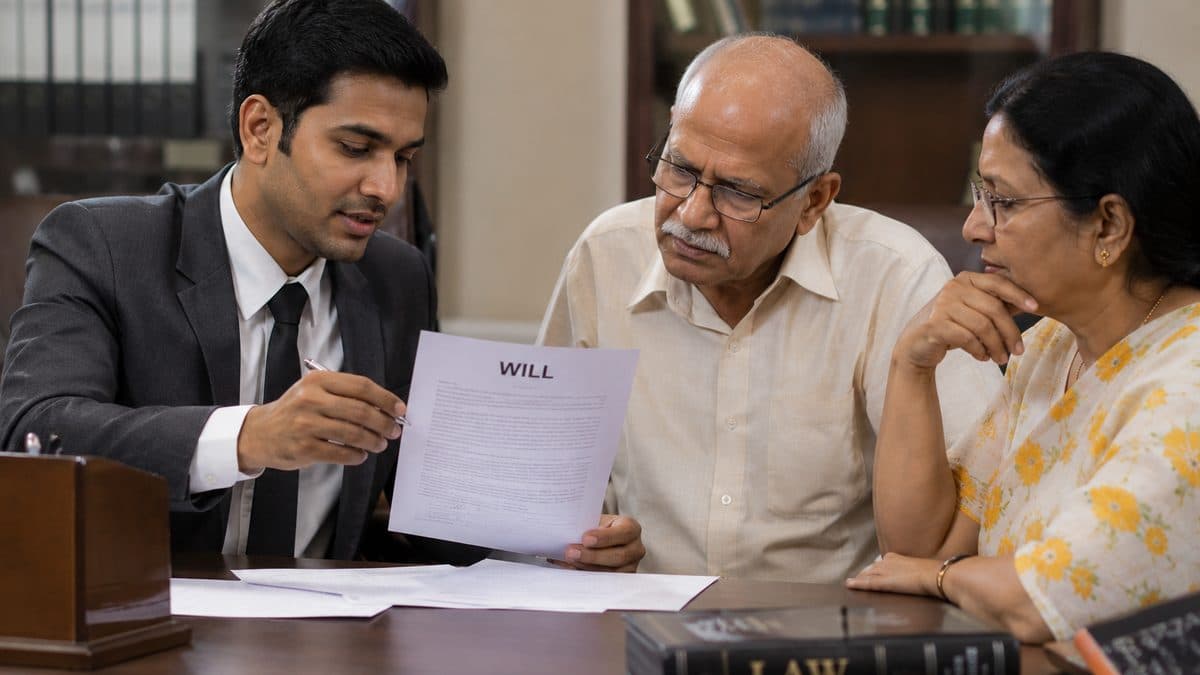
Under Section 16 of the Hindu Marriage Act, a child born from a void or voidable marriage is legitimate. On that basis, in Kiran Tukaram Shelke v. Union of India (2026:BHC-AS:41837-DB), decided in October 2026, the Bombay High Court quashed a 2005 Railway Board circular that denied railway passes and related benefits to such children. The Court held that the label ‘illegitimate’ cannot be used to deny children benefits linked to a parent’s service, and that doing so violates Article 14.
Second marriages contracted while the first marriage was still subsisting are more common than families like to admit, and they surface in our office at the worst possible moments: a death, a pension claim, a property partition. The question is always the same — what about the children?
The case
A trackman with Central Railway married in 2004. That marriage ended in a mutual consent divorce in 2014, and he married his second wife in 2016. Two of their three children were born in 2009 and 2012, while the first marriage was still subsisting; the third was born in early 2016, after the divorce but before the second wedding. The Railways accepted the second wife as his spouse but refused passes and medical benefits to all three children, relying on a 2005 circular.
The Bench of Chief Justice Mahesh Chandra Tripathi and Justice Advait M. Sethna held that the law draws no distinction between children of valid and void marriages for these benefits, quashed the circular in full, and directed the Railways to reconsider within two months. It relied on the Supreme Court’s decisions in Union of India v. V.R. Tripathi (2019), on compassionate appointment, and Mukesh Kumar v. Union of India (2022), which treated discrimination based on the validity of a parent’s marriage as discrimination by descent.
What Section 16 gives the child
| Area | Position for a child of a void marriage |
|---|---|
| Legitimacy | Legitimate, by statute |
| Maintenance from the father | Yes — Section 144 BNSS and the Hindu Adoptions and Maintenance Act |
| Service benefits, family pension, compassionate appointment | Cannot be denied on the ground of the parents’ void marriage, following V.R. Tripathi, Mukesh Kumar and now this judgment |
| Father’s self-acquired and separate property | Inherits as a Class I heir along with the other children |
| Ancestral or joint family property | Entitled to the father’s share as it would fall on a notional partition — not an independent coparcenary right by birth (Revanasiddappa v. Mallikarjun, 2023) |
When this usually comes up in Pune
- A government or PSU employee dies, and the second family applies for family pension or compassionate appointment.
- A partition suit over a wada in the old city or agricultural land in the district, where children from both families claim a share.
- A maintenance claim against a father who has moved on from the second family.
- School, passport or service-record entries where the father’s marital history is questioned.
Documents to gather
Birth certificates naming the father, school records, any photographs or records of the marriage ceremony, joint bank or address records, and the divorce decree from the first marriage if there was one. Where paternity is disputed, the question becomes one of proof, and that changes the case entirely.
The bottom line
Whatever the legal status of their parents’ marriage, children are not to be penalised for it. If a department, employer or relative is refusing a child something on that ground alone, the refusal is very likely open to challenge.