
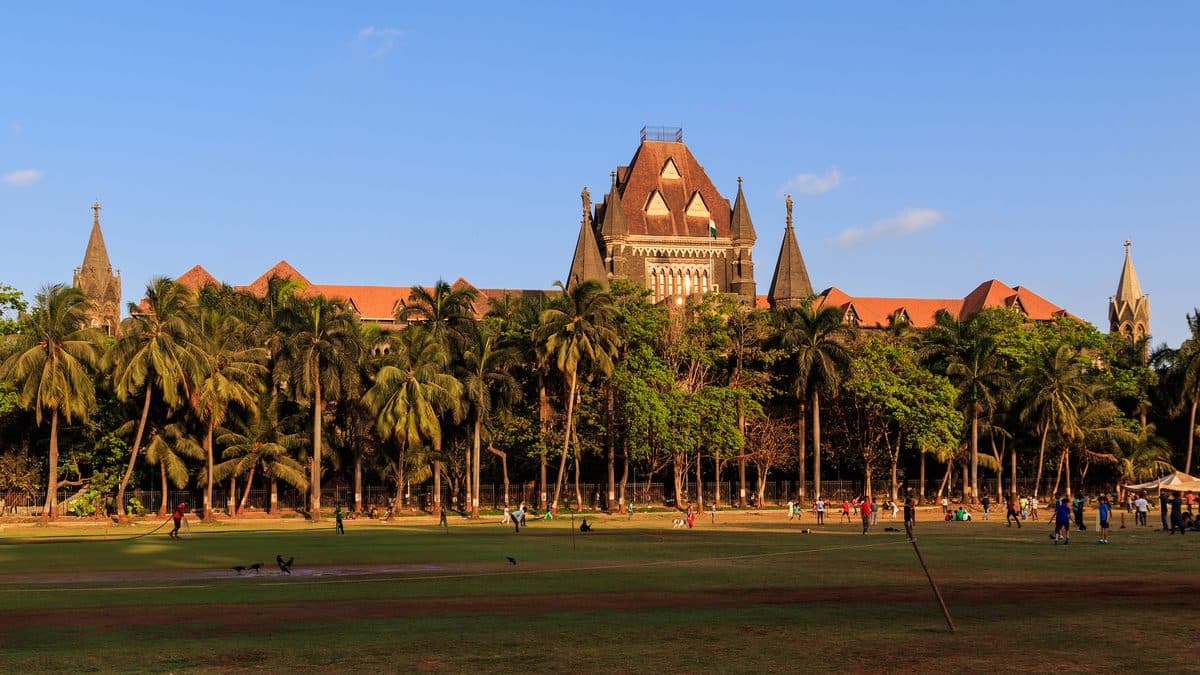
Cruelty under Section 13(1)(i-a) of the Hindu Marriage Act is conduct grave enough that the petitioner cannot reasonably be expected to continue living with the respondent. Recent Bombay High Court decisions have drawn the line firmly: ordinary friction, disagreement with in-laws and a refusal to take on household work do not meet it, and testimony from the petitioner's own relatives, standing alone, is unlikely to prove it.
The statute has never defined cruelty, which is why petitions drafted from templates fail. The pleading that gets a decree is not the one with the longest list of grievances — it is the one that identifies specific conduct, on identifiable dates, corroborated by something other than the petitioner's family.
The 2026 decision that redrew the boundary
On 8 May 2026, a Division Bench of the Bombay High Court set aside a decree of divorce granted by a Family Court on the ground of cruelty. The husband's case was that his wife did not perform household work, did not cook properly, was disobedient towards his parents and behaved rudely, and that this caused him mental stress. The Family Court had accepted it in 2010. Sixteen years later the High Court did not.
The Court's language was direct: marriage is a partnership of equals and not a service contract, and a wife is not a maid. Failure or unwillingness to do domestic chores does not, by itself, amount to mental cruelty. Routine adjustments and disagreements, particularly in the early phase of a marriage, do not clear the threshold unless there is evidence of serious and sustained conduct that makes living together impossible.
Two other findings in the same judgment are worth as much to anyone preparing a petition. First, on evidence: the husband's witnesses were his mother and his maternal aunt, and the Court held that testimony from interested witnesses was not sufficient to prove the allegations. Second, on maintenance: the Family Court had refused the wife maintenance largely on the strength of one advertisement for art and craft classes she had issued. That was held far too thin a basis for concluding she had an independent income, and maintenance was restored at ten thousand rupees a month, with a further ten thousand towards accommodation.
What courts have treated as falling short
| Commonly pleaded as cruelty | How courts have approached it |
|---|---|
| Refusal or failure to do household chores | Not cruelty by itself — Bombay High Court, May 2026 |
| Ordinary quarrels and adjustment problems early in the marriage | Common and ordinary; below the threshold |
| Disobedience or rudeness towards the husband's parents | Not sufficient without evidence of serious, sustained conduct |
| A general assertion of mental stress, without incidents | Unprovable as pleaded |
| Specific incidents, dated, corroborated beyond the petitioner's own family | The pleading that is actually capable of proof |
Where maintenance sits alongside it
Cruelty and maintenance are separate questions decided on separate tests, and conflating them is a frequent and expensive error. The Nagpur Bench of the Bombay High Court reaffirmed this in 2026 in a revision brought by a husband: a wife may be entitled to maintenance even where he says he personally committed no act of cruelty. What the court examines is neglect and whether living separately was justified — and a woman cannot be required to remain in a household where she faces humiliation, harassment or a loss of dignity. Maintenance under Section 144 BNSS, the Court reiterated, exists to prevent destitution, not to punish a spouse.
That does not make maintenance automatic. In a decision at the end of 2025, the High Court declined to interfere with a Family Court order refusing interim maintenance to a working wife under Section 24 of the Hindu Marriage Act, while maintaining maintenance for the minor child — interim maintenance is not a matter of right for a spouse who is financially independent and able to maintain herself. What decided both cases was the same document: the affidavit of assets and liabilities that the Supreme Court made mandatory in maintenance proceedings in Rajnesh v. Neha.
What this means if you are preparing a petition in Pune
- Plead incidents, not characteristics. Dates, places, who was present, what was said or done.
- Identify corroboration before filing — messages, medical papers, complaints made at the time, neighbours or colleagues. Relatives alone are unlikely to carry it.
- Expect the affidavit of assets and liabilities to be scrutinised on both sides. Understating income is the fastest way to lose a court's confidence on every other issue.
- Do not assume conduct that ends the marriage in practice will end it in law. Grave and weighty is the standard, and it is applied.
- If the marriage is genuinely over on both sides, ask early whether a mutual consent petition is the honest route. A contested cruelty petition, if it fails, has cost years and left the marriage intact.
Why appellate decisions matter to a Pune matter
Family Court decrees from Pune are appealable to the Bombay High Court, so its view of what cruelty requires is not academic — it is the standard a Pune decree will be measured against if it is challenged. A decree obtained on thin evidence is not a settled outcome; the May 2026 judgment set one aside sixteen years after it was granted.
The bottom line
The threshold for cruelty has not moved, but courts are applying it with visibly less patience for grievance dressed up as legal ground. Plead what can be proved, gather corroboration before filing rather than after, and treat the financial affidavits as seriously as the allegations — because in the reported decisions of the last eighteen months, that is what the outcomes turned on.